Types of Inventory Management for Walmart Sellers
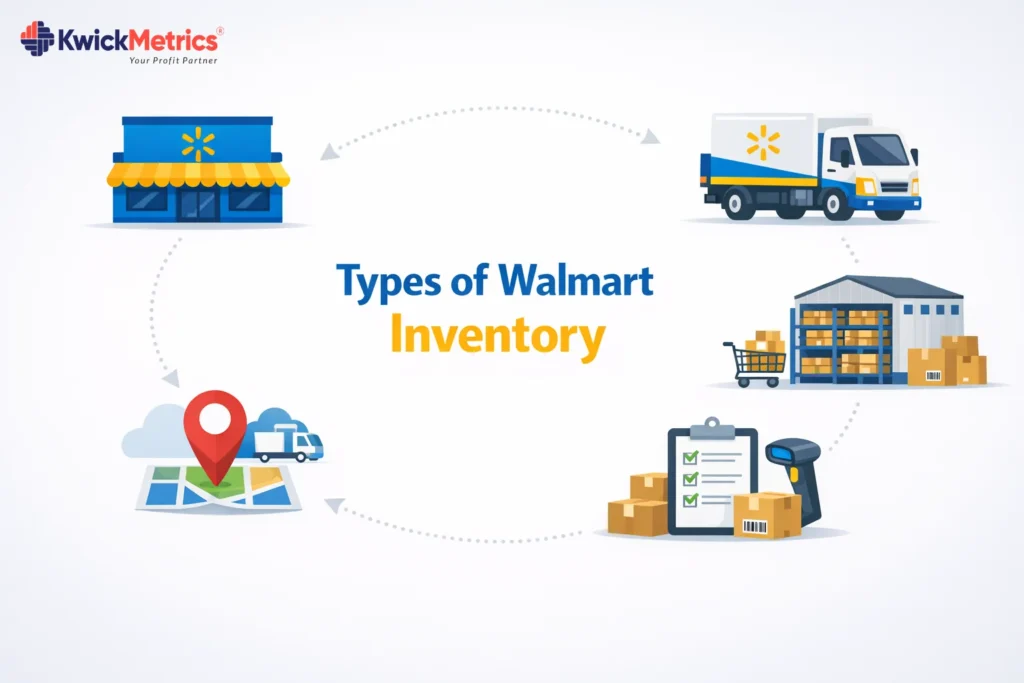
Table of Contents
- Introduction:
- What is Inventory Management on Walmart?
- Why Choosing the Right Inventory Type Matters for Walmart Sellers
- Types of Inventory Management for Walmart Sellers
- How to Choose the Right Inventory Management Type
- Which Inventory Management Type is Best for Walmart Sellers?
- Common Inventory Mistakes Walmart Sellers Make
- Conclusion
- Get Your Questions Answered (FAQ)
TL;DR
The types of inventory management for Walmart sellers focus on where inventory is stored and who is responsible for fulfilling customer orders. It covers Seller-Fulfilled inventory, Walmart Fulfillment Services (WFS), Drop Ship Vendor (DSV), Big & Bulky, and 3PL models, and explains how each approach impacts fulfillment fees, fulfillment performance, and seller metrics. The blog explains sellers understand how different inventory models affect daily operations and long-term business stability.
Introduction:
Inventory management plays a critical role in how successfully a seller operates on Walmart. While product selection and pricing attract customers, inventory decisions determine whether listings remain active, orders are fulfilled on time, and sales continue without interruption.
Walmart supports multiple inventory management models based on where inventory is stored and who fulfills customer orders. Understanding these options helps sellers avoid stockouts, overstock, control storage costs, and maintain consistent performance on the marketplace.
What is Inventory Management on Walmart?
Inventory management on Walmart refers to how sellers store, track, and replenish their products while fulfilling customer orders. Since Walmart supports multiple inventory models, sellers must decide where inventory is stored and who handles fulfillment.
For a deeper understanding of planning and controlling stock efficiently, refer to our guide on How to Manage Inventory Effectively.
Why Choosing the Right Inventory Type Matters for Walmart Sellers
Walmart offers different inventory management types, and choosing the right one can directly affect your profit and daily operations. Each model differs in where inventory is stored, who handles shipping, and what fees are involved.
Selecting the right inventory type helps sellers manage workload, avoid unnecessary fees, and maintain consistent order fulfillment. Making the wrong choice can increase costs or create operational pressure, which may affect overall business performance.
Types of Inventory Management for Walmart Sellers
Walmart supports several inventory management models each designed for different seller capabilities and product requirements.
Walmart Fulfillment Services (WFS)

Under Walmart Fulfillment Services (WFS), sellers send inventory to Walmart-operated warehouses. Walmart handles storage, picking, packing, and shipping orders to customers.
From an inventory perspective, sellers focus mainly on restocking. Sending too much inventory can increase storage costs, while sending too little can result in stockouts. This model is well-suited for sellers who want Walmart to manage fulfillment and ensure faster delivery to customers.
Why Sellers Choose WFS
- Faster delivery that meets Walmart’s shipping standards.
- Reliable order fulfillment handled fully by Walmart.
- Less daily workload for packing and shipping.
- Easy scaling as order volume increases
- Helps maintain good performance metrics for listings
Why WFS May Not Fit Everyone
- Limited control over inventory once sent to Walmart
- Overstocking can increase long-term storage fees and affect overall profitability.
- Requires accurate restock planning
Fulfillment Fees:
Fulfillment fees are the charges sellers pay to Walmart for handling the storage and delivery of their products through Walmart Fulfillment Services (WFS).
Fees are generally calculated based on:
- Item size and weight
- Order fulfillment (pick, pack, ship)
- Storage duration and space used in Walmart warehouses
Seller-Fulfilled Inventory Management (SFS)

In seller-fulfilled inventory management, sellers store inventory in their own warehouse or facility and ship orders directly to customers.
This approach gives sellers full control over inventory but also requires accurate stock updates and timely order fulfillment. Sellers are responsible for dispatching orders and ensuring they reach customers on time. Poor inventory accuracy or delayed shipping can negatively impact seller performance metrics.
Why Sellers Choose SFS
- Complete control over inventory and shipping
- Flexible fulfillment for customized or special products
- Sellers keep inventory in their own storage
- Works well for low-volume or niche items
- Control over shipping costs and carriers
Why SFS May Not Fit Everyone
- Higher operational responsibility for sellers
- Risk of delayed shipments affecting performance metrics
- Requires accurate inventory updates
Fulfillment Fees:
In Seller-Fulfilled Shipping (SFS), sellers do not pay fulfillment fees to Walmart, but they are responsible for all shipping and handling expenses.
Fees are typically based on:
- Shipping method and carrier rates
- Packaging and handling per order
- Internal operational fulfillment expenses
Drop Ship Vendor (DSV) Inventory Management

The Drop Ship Vendor (DSV) Inventory Management model is commonly used by manufacturers and distributors. Inventory remains with the vendor, and products are shipped only after Walmart places an order.
Since Walmart controls the customer-facing side, vendors must ensure inventory is readily available and orders are processed quickly. Accurate inventory planning is essential to meet Walmart’s service-level expectations.
Why Sellers Choose DSV
- Inventory stays with the vendor
- No need to send stock to Walmart warehouses
- Best for manufacturers and distributors
- Reduced need to pre-position inventory in Walmart warehouses
- Works well for large or slow-moving products
Why DSV May Not Fit Everyone
- Missed shipping timelines can affect vendor performance metrics
- Repeated issues can lead to account or vendor performance risks
- Sellers cannot fully control product titles, images, or descriptions.
Fulfillment Fees:
In the DSV model, vendors are responsible for order fulfillment and related shipping expenses based on agreed vendor terms.
Fees are generally tied to:
- Order processing and handling
- Shipping and logistics execution
- Vendor-specific fulfillment agreements
Big & Bulky Inventory Management
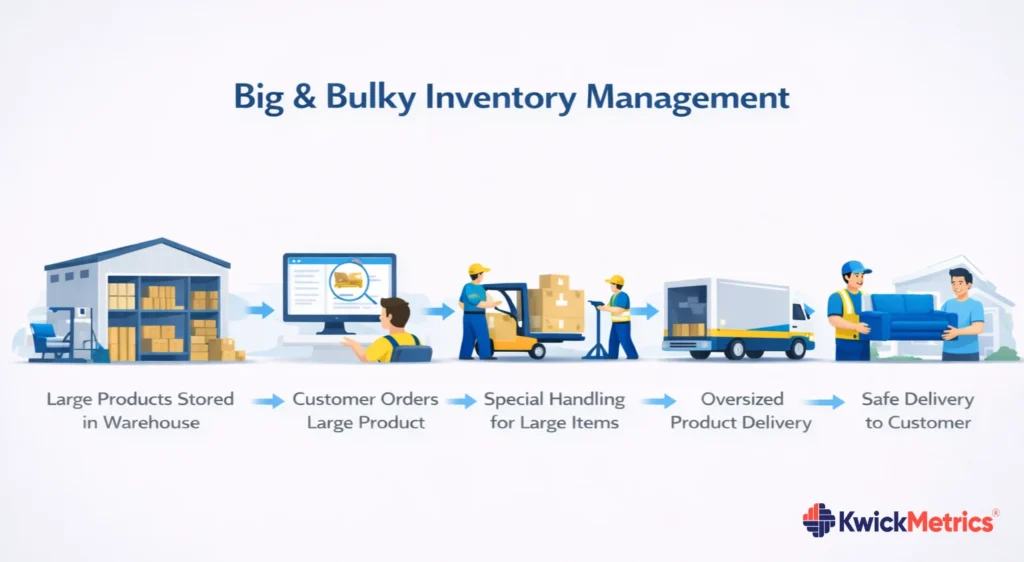
Big & Bulky Inventory Management is managed by Walmart and applies to oversized or heavy products such as furniture, large appliances, and fitness equipment.
These products require specialized storage and delivery handling. Sellers must carefully balance inventory levels because large items occupy more space and involve higher storage and transportation costs. Overstocking can quickly impact profitability, while stockouts can result in lost high-value sales.
Why Sellers Choose Big & Bulky Inventory
- Built for oversized and heavy products
- Special handling for safe delivery
- Designed to reduce damage during delivery
- Ideal for high-value, low-volume items
- Better delivery experience for customers
Why Big & Bulky Inventory May Not Fit Everyone
- Products are harder to handle and ship
- Delivery can take longer than normal items
- Inventory needs careful planning for large items
Fulfillment Fees:
In Big & Bulky fulfillment, sellers pay fees for handling, storing, and delivering large or oversized products.
Fees are typically calculated based on:
- Product dimensions and weight
- Specialized handling requirements
- Large-item delivery and storage needs
Third-Party Logistics (3PL) Inventory Management

With Third-Party Logistics (3PL) Inventory Management, sellers store inventory with an external logistics provider that manages warehousing and order fulfillment on their behalf.
This model reduces the seller’s operational workload but requires close coordination. Inventory levels must remain aligned between Walmart and the logistics partner to prevent overselling or fulfillment delays, especially for sellers managing multiple sales channels.
Why Sellers Choose 3PL
- Third-party handles storage and shipping
- Easy to scale as order volume grows
- Supports multiple sales channels
- Less internal logistics work
- Choice of shipping methods and service levels
Why 3PL may Not Fit Everyone
- Dependency on external partner performance
- Sellers don’t manage daily shipping and storage directly
- Inventory levels may not always stay sync across systems
Fulfillment Fees :
In 3PL, fulfillment fees are the charges sellers pay to a logistics provider for storing inventory and fulfilling customer orders.
Fees are usually calculated based on:
- Storage space used
- Order fulfillment volume
- Service and handling charges from the logistics provider
How to Choose the Right Inventory Management Type
Selecting the right inventory management type depends on several business factors:
- Product size and weight
- Sales volume and demand consistency
- Fulfillment capabilities and internal resources
- Storage and fulfillment cost structure
Carefully evaluating these factors helps sellers choose an inventory model that aligns with their operational capacity, product mix, and long-term growth strategy.
Which Inventory Management Type is Best for Walmart Sellers?
Both Seller-Fulfilled Inventory Management and Walmart Fulfillment Services (WFS) are widely used among Walmart marketplace sellers. There is no single inventory management type that works best for all sellers, as the right approach depends on product type, operational capacity, and business stage. In practice, many sellers use a mix of inventory models to balance control and scalability.
- Seller-Fulfilled Inventory Management: Best for sellers who want full control over inventory and shipping.
- Walmart Fulfillment Services (WFS): Ideal for sellers aiming to scale and support faster delivery expectations.
- Drop Ship Vendor (DSV): Works well for manufacturers and distributors with strong fulfillment readiness.
- Big & Bulky Inventory Management: Designed for oversized or heavy products requiring specialized handling.
- Third-Party Logistics (3PL): Often used by sellers who outsource warehousing and manage multiple sales channels.
Ultimately, the most effective inventory management approach is one that aligns with the seller’s product mix, fulfillment capabilities, and long-term business objectives.
Common Inventory Mistakes Walmart Sellers Make
Many sellers face inventory management challenges due to avoidable mistakes, such as:
- Choosing an inventory model without understanding its fee structure
- Overstocking without considering storage duration
- Poor replenishment planning
- Managing inventory across multiple locations without coordination
- Ignoring how inventory decisions affect fulfillment performance
Avoiding these mistakes begins with understanding how different inventory management types work and selecting the right model based on business needs.
Conclusion
The types of inventory management for Walmart sellers are defined by where inventory is stored and who fulfills customer orders. Each model carries different operational responsibilities, fulfillment processes, and fee structures.
By understanding Walmart inventory management types and choosing the right approach for their business, sellers can reduce disruptions, improve fulfillment performance, and support steady, sustainable growth on the Walmart marketplace.
Get Your Questions Answered (FAQ)
The main types of inventory management for Walmart sellers include Seller-Fulfilled inventory, Walmart Fulfillment Services (WFS), Drop Ship Vendor (DSV), Big & Bulky inventory, and 3PL inventory management. Each type differs based on where inventory is stored and who fulfills customer orders.
Walmart Fulfillment Services (WFS) is suitable for sellers who want to scale operations and support faster delivery. It works well for consistent, fast-selling products where Walmart manages storage and shipping.
Drop Ship Vendor (DSV) inventory management is typically used by manufacturers or distributors. Inventory stays with the vendor, and orders must be shipped quickly when Walmart places them.
Big & Bulky inventory is designed for oversized or heavy products such as furniture or large appliances. Walmart manages specialized handling and delivery for these items.
3PL inventory management involves storing inventory with a third-party logistics provider. Sellers often use it when they want to outsource warehousing and manage inventory across multiple sales channels.
Yes. Many sellers use a hybrid approach, combining different Walmart inventory models based on product type, order volume, and operational needs.


Nilanth is a contributor at KwickMetrics and a Full Stack Developer with 7+ years of experience building scalable web applications using Laravel, ReactJS, NextJS, and Headless WordPress. He plays a key role in enhancing KwickMetrics by developing efficient, high-performance solutions that help sellers and agencies gain better insights, streamline operations, and drive growth.