What is Amazon Brand Registry: Benefits, Requirements & How to Enroll
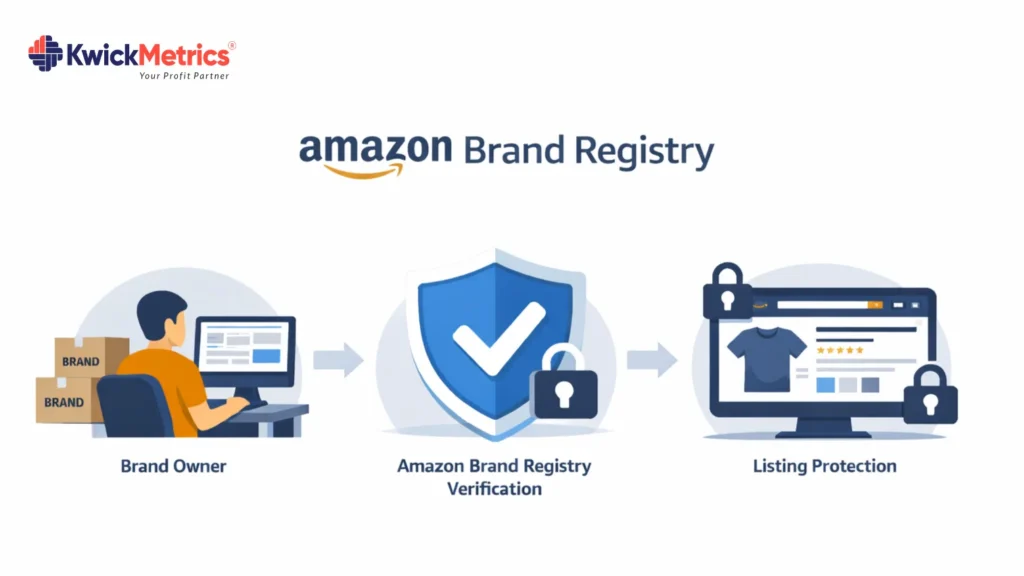
Table of Contents
- Introduction:
- What is Amazon Brand Registry?
- Why Amazon Introduced Brand Registry
- Who is Eligible for Amazon Brand Registry
- Requirements for Amazon Brand Registry
- Amazon Brand Registry Process (Step-by-Step)
- Is Amazon Brand Registry Mandatory?
- Common Mistakes Sellers Make
- Conclusion
- Get Your Questions Answered (FAQ)
Introduction:
Building a successful brand on Amazon takes more than creating a product listing. As your business grows, protecting your intellectual property, maintaining accurate product information, and building customer trust become increasingly important.
Amazon Brand Registry is a free program that helps eligible brand owners protect and grow their brands on Amazon. It provides access to brand protection tools, enhanced content, analytics, advertising opportunities, and other brand-building features.
In this guide, we’ll explain Amazon Brand Registry requirements, eligibility, benefits, trademark requirements, enrollment steps, costs, and common mistakes.
What is Amazon Brand Registry?
Amazon Brand Registry is a free program designed to help eligible brand owners protect their intellectual property, manage their brand presence, and build their business on Amazon.
Depending on eligibility, enrolled brands can access tools and programs such as:
- A+ Content
- Amazon Brand Stores
- Brand Analytics
- Sponsored Brands
- Amazon Vine
- Manage Your Experiments
- Report a Violation
- Transparency and Project Zero, where eligible
Brand Registry is more than a protection program. It can also help brands make better decisions about their listings, advertising, and overall Amazon strategy.
However, enrollment does not give a brand unlimited control over every aspect of an Amazon product detail page. Amazon’s catalog rules and content policies still apply.
Why Amazon Introduced Brand Registry
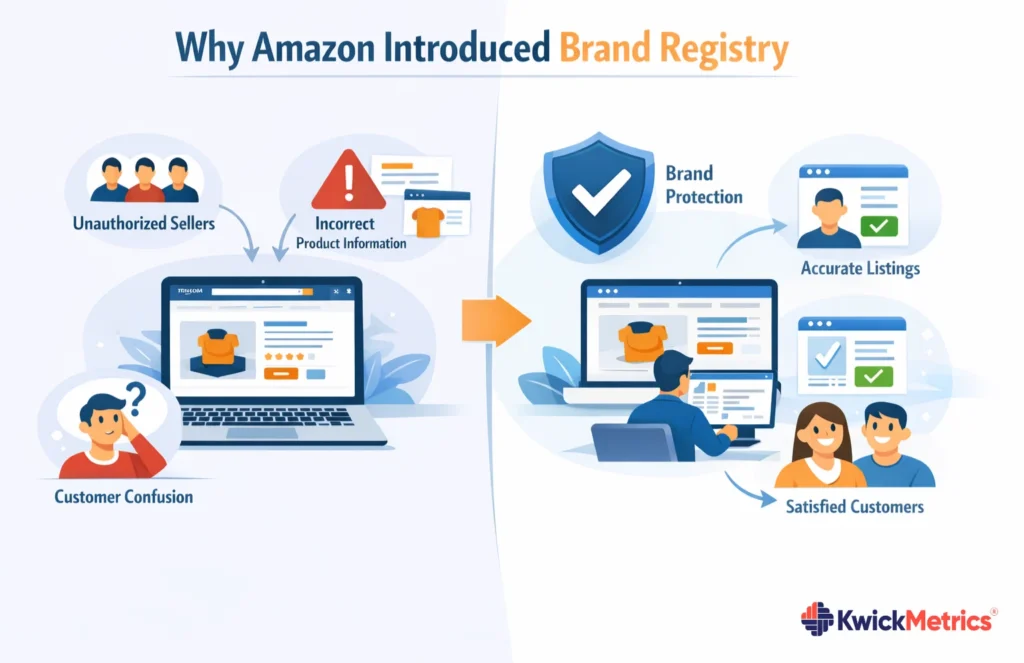
Amazon introduced Amazon Brand Registry to solve these problems:
- Unauthorized and fake products
Sellers found other accounts selling fake or look-alike products under their brand name, which damages trust and reviews.
- Listing hijacking
Other sellers could use titles, images, or descriptions on shared listings, which can confuse customers and affect sales.
- No brand ownership proof
Amazon had no reliable way to identify who owned a brand, making it difficult to protect genuine sellers.
- Slow trademark and IP enforcement
Reporting brand or trademark violations was manual and often took too long to resolve.
- Catalog errors and duplicate listings
Multiple sellers submitting different product data caused merged ASINs and duplicate listings.
- Customer confusion and poor experience
Inconsistent listings and fake products confused buyers and reduced confidence in the brand.
- Difficulty scaling a brand-focused business
Without brand protection, genuine brand owners struggled to grow while competing with resellers and unauthorized sellers.
Who is Eligible for Amazon Brand Registry
Amazon Brand Registry is available only to sellers who own a brand.
This includes:
- Private label sellers
- Manufacturers selling directly on Amazon
- Brand owners with legal ownership
Resellers and distributors generally do not qualify unless they hold trademark rights for the brand.
Requirements for Amazon Brand Registry
Before applying, make sure your business meets the main Amazon Brand Registry requirements.
1. An eligible trademark
Amazon currently requires an active registered trademark or an eligible pending trademark application for your brand name or logo.
The trademark may be a text-based mark or an image-based mark containing words, letters, or numbers. Requirements can vary depending on the trademark office and Amazon marketplace involved.
2. Trademark ownership
The trademark owner must submit the Brand Registry application.
If an agency, employee, or other authorized person manages your Amazon account, the trademark owner should enroll the brand and then provide appropriate access to other users.
3. Your brand must appear on the product or packaging
Your brand name or logo should be permanently affixed to the product or packaging.
Amazon requires applicants to provide images showing the brand on the product or packaging. Temporary or removable branding may not satisfy the requirement.
4. Matching brand information
The information in your application should correspond with your trademark record.
You may need to provide:
- Brand name
- Trademark registration or application number
- Trademark information
- Brand logo
- Product categories
- Product or packaging images
- Manufacturing or distribution information
Review these details carefully before submitting your application to reduce potential delays.
Amazon Brand Registry Process (Step-by-Step)
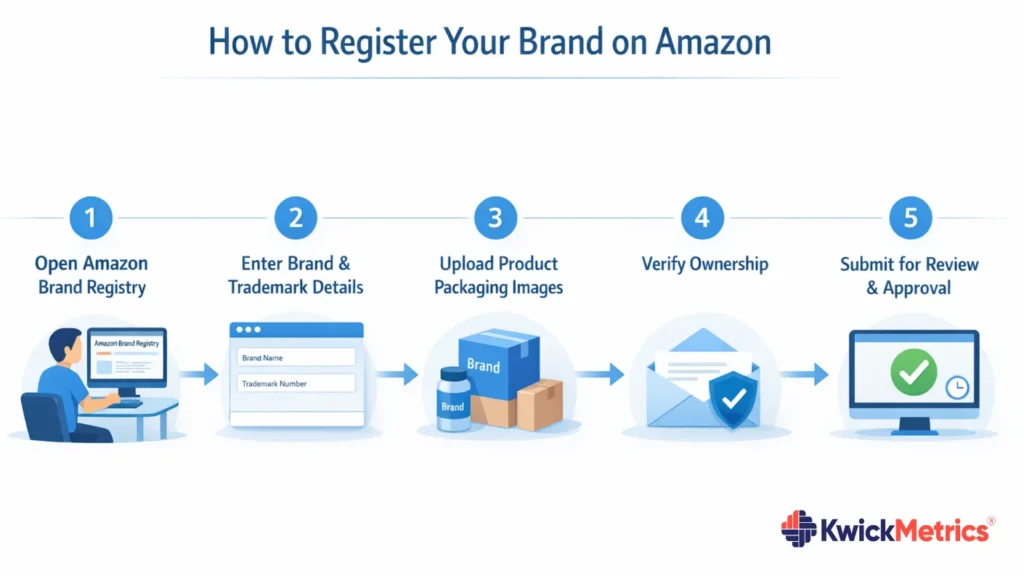
Here is how to register your brand on Amazon:
Step 1: Log in to your Amazon account and open the Brand Registry portal.
Step 2: Enter your trademark and brand details.
Step 3: Upload product or packaging images that clearly show your brand name or logo.
Step 4: Verify ownership using the code sent to the trademark contact email.
Step 5: Submit the application and wait for Amazon to review it.
Approval timelines vary, but most sellers receive confirmation within a few weeks.
Source link: https://sell.amazon.com/brand-registry
Is Amazon Brand Registry Mandatory?
Amazon Brand Registry is not mandatory for all sellers. Sellers can list and sell products without it.
However, it becomes highly important if:
- You are building a private label brand
- You want stronger control over your product listings
- You want access to advanced brand tools
For brand-focused sellers, Amazon Brand Registry for sellers is often a practical necessity rather than an option.
Common Mistakes Sellers Make
These are the most common mistakes sellers make before and after enrollment,
- Brand name on the product or packaging does not match the registered trademark exactly
- Registering the brand in one marketplace and leaving other marketplaces unprotected
- Never setting up A+ Content, Brand Store, or Brand Analytics after getting approved
- Filing too many incorrect Amazon IP complaint reports without fully understanding the process, which can get your reporting access restricted by Amazon.
- Assuming Brand Registry gives complete protection and stopping listing monitoring after enrollment
- Applying for Brand Registry only after an unauthorized seller has already damaged listings or reviews
Conclusion
Amazon Brand Registry helps brand owners protect their product listings, keep control over their brand content, and reduce problems caused by unauthorized sellers on Amazon. While meeting the requirements, such as having a registered trademark, may take some preparation, it helps create a stronger foundation for building a stable brand on Amazon. For private label and growing sellers, understanding Amazon Brand Registry helps them decide when brand protection and accurate listings become important as their business grows.
To better understand how to protect your brand from IP complaints, read our blog about How to Protect Your Brand From Getting an Amazon IP Complaint.
Get Your Questions Answered (FAQ)
Amazon Brand Registry is a program that helps brand owners protect their intellectual property on Amazon. It gives registered brands more control over product listings and access to brand-specific tools.
Amazon does not charge a fee to enroll in Brand Registry. However, sellers may incur costs related to obtaining a registered trademark, which is handled separately.
Approval timelines can vary, but most sellers receive confirmation within a few days to a few weeks after submitting all required details correctly.
No, Brand Registry is not mandatory to sell on Amazon. However, sellers without it may have limited control over listings and fewer brand protection options.
Brand Registry improves brand protection on Amazon by allowing faster reporting of violations and helping Amazon identify unauthorized sellers. It reduces issues but does not eliminate them entirely.
Indirectly, yes. By unlocking features such as A+ Content and Brand Analytics, Brand Registry helps sellers present products more clearly, which can support better visibility and conversion over time.
